
Hostile Vehicle Mitigation (HVM) Barriers | Ontario Bollards
Protecting Your People,
Property & Perimeter.
Ontario Bollards manages the full HVM process — from site assessment and crash-rated specification to supply, installation, and ongoing service. One call. Complete protection.
Vehicle Threats Are Real — and Getting Closer to Home
Hostile Vehicle Mitigation (HVM) is the practice of using physical barriers to prevent vehicles from being used as weapons against people, buildings, or critical infrastructure.
Vehicle-as-weapon incidents have targeted storefronts, public spaces, government buildings, and transit hubs across North America and Europe. The question is no longer whether a site needs protection — it's what level of protection is appropriate and how to implement it correctly.
Crash-rated barriers are the last line of defense. Ontario Bollards sources and installs ASTM F2656 and IWA 14-1 certified products that have been physically tested to stop a loaded vehicle at speed — and we provide the documentation to prove it.
We work with facility managers, architects, engineers, and general contractors to get the right system specified, approved, and installed — without the guesswork.
Why the language matters
Terms like “crash-rated,” “anti-ram,” and “engineered” are not interchangeable. Only one of them comes with a third-party test certificate.
| Term | What it actually means |
|---|---|
| Crash-Rated | Tested under a recognized standard (ASTM F2656 or IWA 14-1). Has a documented, auditable rating. |
| HVM Barrier | Any physical system — bollard, beam, or wall — designed to stop a vehicle threat. Broad category. |
| Anti-Ram | Marketing term only. Means nothing without a rated crash test to back it up. |
| K4 / K12 | IWA 14-1 ratings. K4 stops a 7,500 kg vehicle at 48 km/h. K12 stops at 80 km/h. |
| M30 / M50 | ASTM F2656 ratings. M30 = 48 km/h. M50 = 80 km/h. Functionally equivalent to K4/K12. |
| Engineered Bollard | Custom-designed for a specific site. May or may not be crash-rated — always ask for the certificate. |
| Crash-Tested | Has undergone physical crash testing. Should come with a detailed test report and compliance certificate. |
Never accept “crash-tested” at face value — always ask for the specific standard, test date, and third-party certificate.
The Right Barrier for Every Site
We specify and install a full range of crash-rated HVM solutions. Every recommendation starts with a site assessment — not a product catalog.
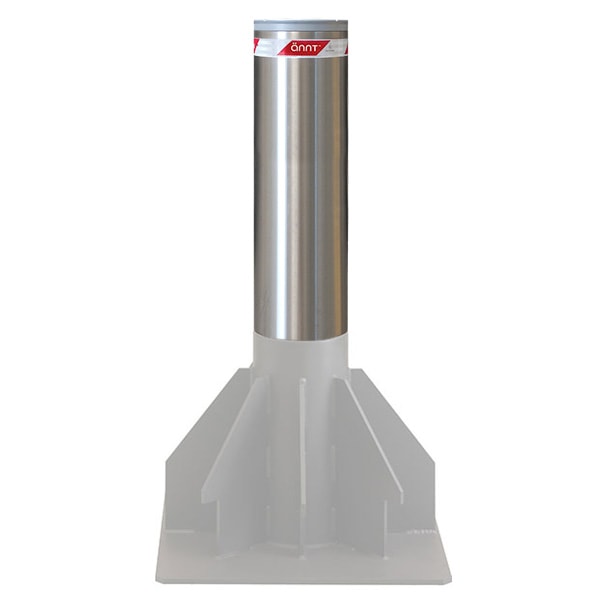
Permanent, in-ground bollards for continuous perimeter protection. Ideal for locations where vehicle access is never permitted. Available in K4 and K12 ratings, with both standard deep-pour and shallow-foundation installation options to suit existing site conditions.
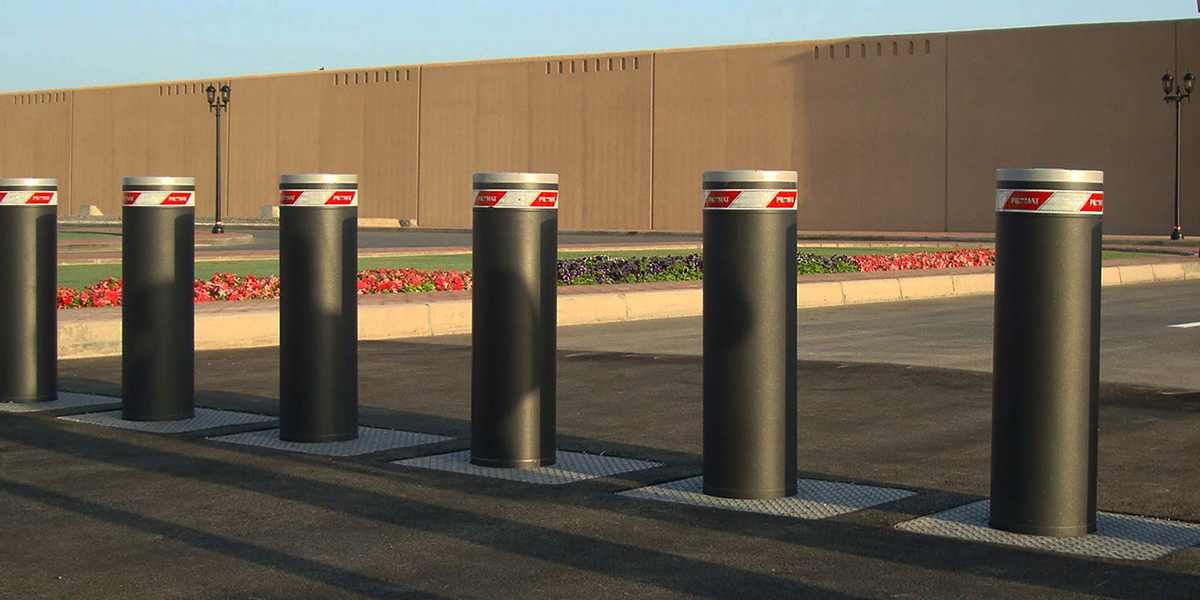
Crash-rated bollards that lower into a receiving sleeve to permit authorized vehicle access. The right solution for loading docks, driveways, and emergency access points that need controlled vehicle entry without sacrificing certified protection when the bollard is raised.
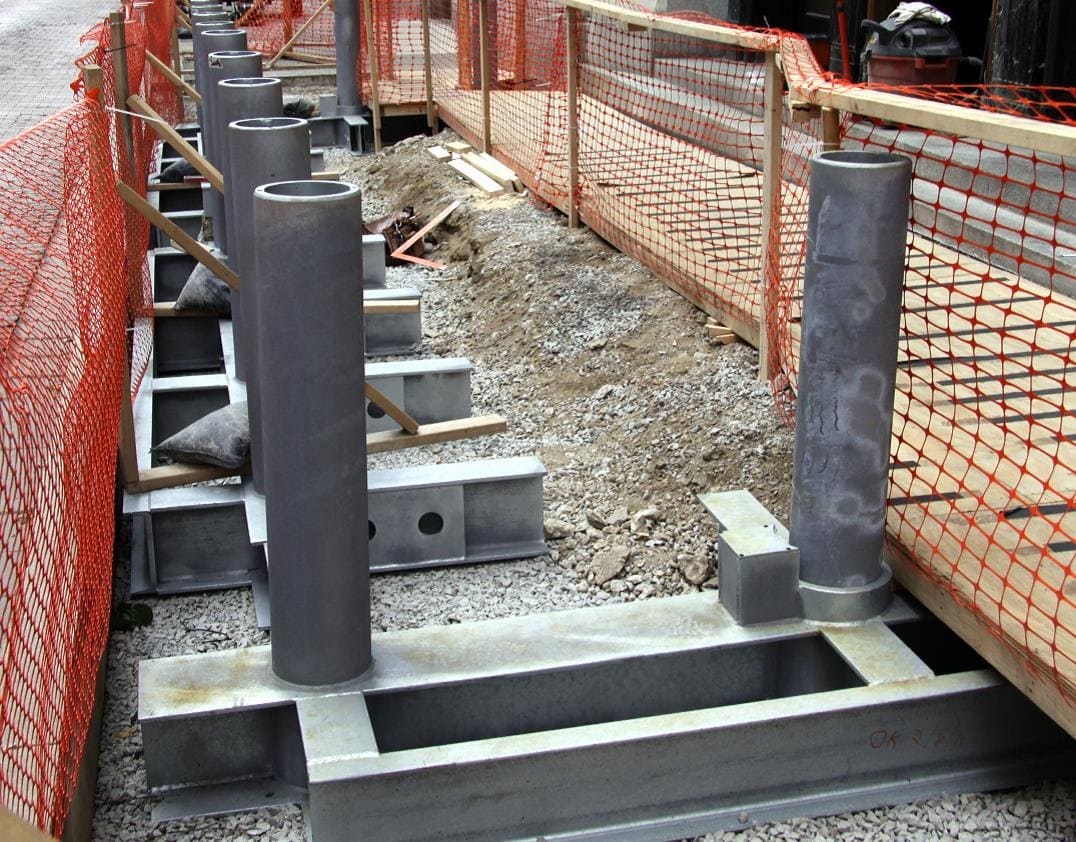
Full crash-rated protection with minimal excavation. Engineered base plates distribute impact force over a wider footprint, eliminating the need for a deep concrete pour. Ideal for retrofit projects, above-grade slabs, underground parking structures, and sites where deep excavation is impractical.
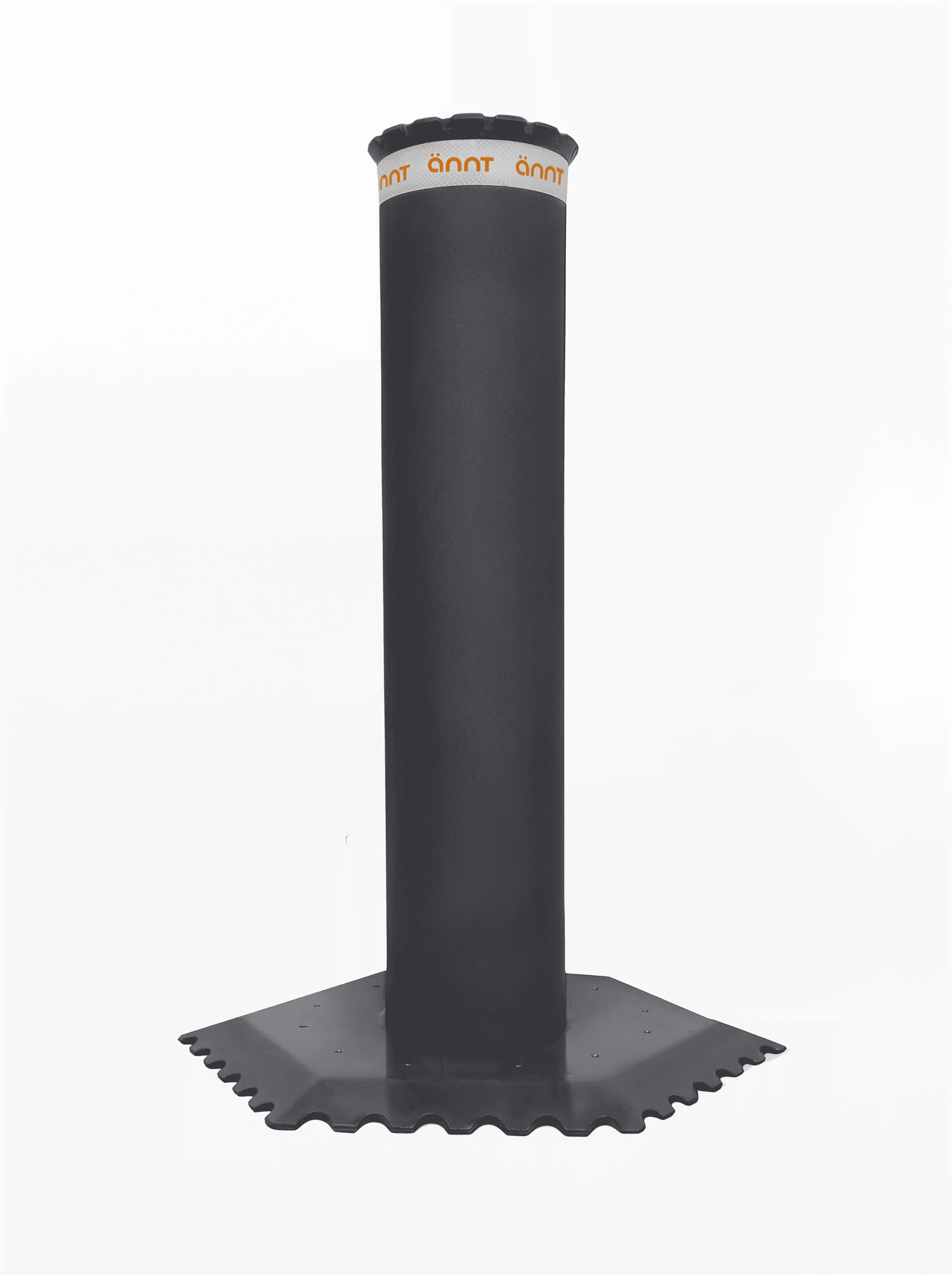
Fast-deploy surface-mounted and portable barrier systems for events, temporary facility closures, and construction site perimeters. No ground penetration required. Can be repositioned as site conditions change, and returned after temporary use.











From First Call to Final Inspection
We don't hand you a product sheet and leave you to figure out the rest. Every project follows a structured, documented process from the first site visit to final commissioning.
We visit the site and walk the perimeter with you. We map vehicle approach vectors, access points, and existing infrastructure before recommending anything.
We assess the threat level, site classification, and any jurisdictional or insurance requirements. This determines what crash rating you actually need — not what's easiest to sell.
We design a barrier layout that closes threat vectors without disrupting day-to-day operations. Drawings and specifications are ready for your architect or general contractor.
We work alongside your design team to get the right products specified in tender documents. We support the approval process and answer technical questions for engineers and architects at any project stage.
We supply certified, tested barriers and manage installation with our own crews. No subcontracting the critical part. All work is documented and completed to specification.
Crash-rated barriers require periodic inspection and maintenance to remain compliant. We offer service contracts and respond to on-demand service calls. We carry parts for the systems we install.
One Company. Every Step.
We're not a distributor passing you to an installer. We own the full process from assessment to commissioning — which means one point of accountability and nothing falls through the cracks.
Based in Brampton, Ontario. We understand Canadian procurement requirements, winter installation conditions, and what specifiers in this market actually need from a protection supplier.
Every barrier we install comes with third-party test certification under ASTM F2656 or IWA 14-1. No marketing claims without documentation. Ask us for the certificate on any product we quote.
We work alongside architects, engineers, and project managers through the design and tender process. We provide specifications, shop drawings, and RFI responses in the format your team needs.
Our team brings over 30 years of combined experience in perimeter protection and construction. We've handled complex, high-stakes installations for government agencies, manufacturers, and major retailers.
Frequently Asked Questions
It depends on your site classification, threat model, and any jurisdictional or insurance requirements. Government buildings and critical infrastructure often require K12 (IWA 14-1) or M50 (ASTM F2656), which stops a loaded vehicle at 80 km/h. Many commercial sites are well-served by K4/M30. We assess each site on its own merits and recommend the appropriate rating — we don't default to the highest spec to upsell you.
Fixed bollards use a standard deep concrete pour to anchor the foundation. Shallow foundation bollards achieve the same certified crash rating using a wider engineered base plate that distributes the impact force over a larger footprint — requiring far less excavation. Both deliver identical certified protection. Shallow foundation is the right choice for retrofit projects, sites with underground parking, or anywhere deep digging is impractical or cost-prohibitive.
Yes — that's built into our standard process. We provide specifications, shop drawings, and technical documentation formatted for tender packages. We engage directly with design teams, respond to RFIs, and support approvals at all project stages. Getting us involved during the design phase typically avoids costly changes during construction.
Most commercial installations complete in one to three days, depending on scope and site conditions. Larger perimeter projects or sites with complex underground conditions take longer. We provide a full project schedule as part of our proposal so you can coordinate with other trades and minimize disruption to your facility.
Yes. Retractable and automatic bollard systems require periodic inspection and service to maintain their rated performance. We offer ongoing service contracts and respond to on-demand service calls. Because we stock parts for the systems we install, turnaround is faster than going through a third-party supplier who's unfamiliar with what's in the ground.
Start With a Free Site Assessment
Tell us about your site and we'll come to you. No obligation, no hard sell — just a straight assessment of what your perimeter needs and what it will take to protect it properly.
Request an Assessment