
How Far Apart Should Bollards Be Placed? ADA & Security Spacing Standards Explained
Comments Off on How Far Apart Should Bollards Be Placed? ADA & Security Spacing Standards ExplainedHow Far Apart Should Bollards Be Placed?
A Guide for Landscape Architects & Security Specifiers
Quick Answer: Typical Bollard Spacing at a Glance
-
Most sites: Place bollards 3–5 feet (0.9–1.5 m) apart, measured from the center of one post to the next.
-
Accessibility (ADA): Leave at least 36 inches (0.9 m) of clear space for wheelchairs and walkers.
-
Vehicle safety: Gaps should be no larger than 5 feet (1.5 m). For high-security areas, reduce spacing to 4 feet (1.2 m) or less.
-
Important: Always check local building codes before finalizing your layout.
Why Spacing Matters: People, Safety, and Design
Good bollard placement is about balance:
-
People first: Bollards should allow smooth pedestrian flow, including those using wheelchairs, strollers, or mobility aids.
-
Safety: They must be close enough to stop vehicles from sneaking through, especially in front of storefronts, schools, or public plazas.
-
Design: Bollards should line up neatly with benches, trees, planters, and lights. This makes the space look organized and welcoming.
Your goal matters too. A storefront protection line will need tighter spacing than a decorative walkway on a campus.
Spacing Rules by Application
Pedestrian & ADA Access
-
Keep at least 36 inches (0.9 m) of clear width for accessibility.
-
In busy areas, give a little more room (42–48 inches) for comfort.
-
Always measure from the outside of the sleeve or cover — not just the post.
Vehicle Deterrence & Storefront Protection
-
Standard safety: Gaps no larger than 5 feet (1.5 m).
-
Higher risk: Tighten to 4 feet (1.2 m) or less.
-
Match spacing to the likely vehicle approach angle and speed.
Sidewalks Next to Parking
-
Set bollards back about 1.5 feet (0.45 m) from the curb.
-
This gives people enough space to open car doors.
-
Leave extra room near accessible parking spaces.
Campuses, Schools, and Plazas
-
Use a steady rhythm of 4–5 feet (1.2–1.5 m) apart.
-
Keep clear “desire lines” where people naturally walk.
-
Make sure emergency vehicles can still get through.
Utility and Asset Protection
-
For sensitive equipment, keep bollards 4 feet (1.2 m) or closer.
-
Consider adding rails or barriers for extra protection.
-
Don’t block maintenance crews from reaching equipment.
Spacing Summary Table
| Use Case | Recommended Spacing | Notes |
|---|---|---|
| Pedestrian / ADA | ≥36 in (0.9 m) clear width | Measure at narrowest point |
| Vehicle Deterrence | ≤5 ft (1.5 m) gap | ≤4 ft (1.2 m) for higher risk areas |
| Sidewalk by Parking | ~1.5 ft (0.45 m) from curb | Allows car doors to open |
| Campuses / Plazas | 4–5 ft (1.2–1.5 m) | Comfort + natural walking patterns |
| Utilities / Assets | ≤4 ft (1.2 m) or add rails | Based on asset importance |
Codes and Standards (Simplified)
-
ADA (Accessibility): At least 36 inches of clear space for people using mobility devices. Local versions may add more rules.
-
ASTM F2656 (Crash Testing): A U.S. crash standard. Some tested bollards only work if placed in a certain pattern — always follow manufacturer instructions.
-
Building Codes: Check International Building Code (IBC) and local rules for exits, sightlines, and fire department access.
-
Traffic Standards (MUTCD): Guidelines for bollards near crosswalks, schools, and intersections.
Note: Local planning departments have the final say. Always confirm with them before construction.
Layout Details: Lines, Corners, and Openings
-
Measurement: Measure from center to center. Don’t forget the sleeve width.
-
Corners: Place bollards closer together to stop diagonal vehicle movement.
-
Access Points: Leave 6–8 feet for gates, deliveries, or emergency access. Use removable or automatic bollards where needed.
-
Site Planning: Check for drainage, underground utilities, snow removal, and seasonal furniture.

Common Mistakes to Avoid
-
Measuring wrong: Forgetting to include sleeves or covers. Always measure the narrowest clear opening.
-
Corner gaps: Leaving wide angles that vehicles can cut through. Tighten bollards at corners.
-
Curb clearance issues: Placing bollards too close to curbs so car doors can’t open. Keep that 1.5-foot offset.
-
Code conflicts: Meeting one rule but breaking another. Always design to the strictest code.
Frequently Asked Questions
Q: What is the standard distance between bollards?
A: Usually 3–5 feet apart, depending on security and accessibility needs.
Q: What is ADA-compliant clear width?
A: At least 36 inches (0.9 m) between bollards at the narrowest point.
Q: How close should bollards be for vehicle safety?
A: No more than 5 feet (1.5 m) apart. High-security areas should be 4 feet (1.2 m) or less.
Q: How far back from the curb should bollards be?
A: About 1.5 feet (0.45 m) to allow doors to open.
Q: Do decorative sleeves change spacing?
A: Yes. Measure spacing at the outer edge of the sleeve, not the post.
Getting Started: Your Next Steps
-
Download CAD/Revit details for ready-to-use layouts.
-
Request a site review from our team for project-specific advice.
Checklist before finalizing your design:
-
Clear width meets ADA rules
-
Local codes verified
-
Vehicle gaps under control
-
Corners secured
-
Emergency access allowed
-
Utilities and drainage checked
Ontario Bollards’ Perimeter Protection Team has extensive experience with both crash-rated and architectural bollards. Need help with your next project? Contact our team for site-specific support.
10 Design Tips for Integrating Stainless Steel Bollards into Modern Urban Spaces
Comments Off on 10 Design Tips for Integrating Stainless Steel Bollards into Modern Urban Spaces10 Design Tips for Integrating Stainless Steel Bollards into Modern Urban Spaces
Transform functional security into architectural assets with these professional design strategies
Bollards don’t have to be eyesores. When done right, stainless steel bollards enhance urban design while delivering critical protection. Whether you’re a landscape architect finalizing site plans or a security specifier balancing aesthetics with threat mitigation, these 10 proven tips will help you integrate bollards seamlessly into any modern urban project.
1. Match Your Bollard Style to Architecture, Not Afterthoughts
The biggest mistake in bollard design? Treating them as last-minute additions. Instead, choose bollard styles that echo your building’s architectural language.
For Modern Buildings: Clean, cylindrical stainless steel bollards with minimal ornamentation complement glass and steel facades.
For Historic Districts: Consider removable bollards that can disappear during events, or choose designs with traditional proportions but contemporary materials.
Pro Tip: Grade 316 stainless steel with a #6 satin finish provides the perfect balance of durability and sophistication for any architectural style.
2. Use the 3-5-7 Rule for Perfect Spacing
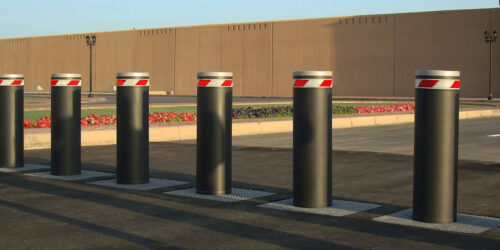
Professional spacing isn’t guesswork—it’s about balancing security, accessibility, and visual rhythm.
3 feet minimum: Required clearance for accessibility compliance
5 feet maximum: Prevents vehicle passage while maintaining pedestrian flow
7 feet spacing: Creates optimal visual rhythm for longer installations
Real-World Application: In downtown Toronto’s financial district, properly spaced stainless steel bollards create protective barriers that feel intentional, not chaotic.
3. Leverage Height Psychology for Better Urban Flow
Standard bollard height ranges from 36-48 inches, but the right height depends on your specific goals:
- 36-inch height: Less imposing, better for retail environments and pedestrian plazas
- 42-inch height: Optimal visibility for most urban applications
- 48-inch height: Maximum presence for high-security zones
Design Insight: Shorter bollards (36-38 inches) encourage interaction—people lean on them, kids play around them. Taller bollards (46-48 inches) command more respect and create stronger psychological barriers.
4. Choose Embedded vs. Surface Mount Based on Permanence
Your installation method dramatically impacts both aesthetics and performance:

Fixed Embedded Bollards
Best for: Permanent installations, maximum impact resistance
Design benefit: Clean lines with no visible hardware
Consideration: Requires concrete work and planning for utilities
Surface Mount Bollards
Best for: Retrofit projects, future flexibility
Design benefit: Easier installation and potential relocation
Consideration: Base plates are visible—factor this into your design
Canadian Insight: Plan embedded installations around frost line depth (typically 4-5 feet) to prevent frost heave damage.
5. Make Retractable Bollards Invisible When Not Needed
The ultimate design trick? Bollards that disappear completely when not in use.
Manual retractable: Perfect for weekend pedestrian zones or farmer’s markets
Automatic retractable: Ideal for emergency vehicle access or high-traffic commercial areas
Design Win: Vancouver’s Robson Street uses retractable stainless steel bollards that create car-free zones during events while maintaining normal traffic flow during business hours.
6. Use Reflective Striping as Design Elements, Not Afterthoughts
Safety requirements don’t have to compromise aesthetics. Strategic reflective striping can actually enhance your design:
Single stripe: Clean, minimalist approach for contemporary spaces
Double stripes: Creates visual weight and presence
Color coordination: Match stripe colors to building accents or wayfinding systems
Pro Specification: Specify colored reflective stripes that complement your overall color palette—yellow for modern industrial, blue for corporate campuses, or red for emergency zones.
7. Group Bollards to Create Intentional Design Moments
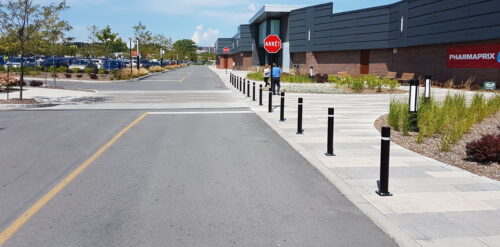
Instead of monotonous straight lines, create visual interest through strategic grouping:
Cluster protection: Group 3-4 bollards around high-value targets like building entrances
Rhythm patterns: Vary spacing slightly to create visual movement along longer runs
Corner emphasis: Use pairs or clusters at pathway intersections
Security Benefit: Clustered bollards provide superior vehicle impact dispersion compared to single-point installations.
8. Specify 316 Grade for Canadian Weather Performance
Material choice directly impacts long-term appearance and maintenance costs:
Grade 304: Adequate for most interior or mild climate applications
Grade 316: Superior corrosion resistance for Canadian winters, salt exposure, and coastal environments
Maintenance Reality: Grade 316 stainless steel bollards maintain their appearance for decades without painting, refinishing, or replacement—crucial for municipal budgets and design integrity.
9. Integrate Lighting for 24/7 Design Impact
Modern bollards can incorporate LED elements that transform sites after dark:
Top-mounted fixtures: Provide pathway lighting while maintaining clean bollard lines
Integrated strips: Create dramatic uplighting effects
Solar options: Reduce electrical infrastructure requirements
Design Consideration: Warm LED temperatures (2700K-3000K) complement stainless steel’s natural finish better than cool white options.

10. Plan for Maintenance Access from Day One
The most beautiful bollard installation fails if it can’t be properly maintained:
Retractable systems: Ensure service access to underground mechanisms
Surface cleaning: Design landscaping to allow equipment access for periodic cleaning
Replacement planning: Specify standard sizes and finishes for future replacement parts
Long-term Success: Stainless steel’s low maintenance requirements make it ideal for installations where access is challenging—but always plan for the inevitable service needs.
Putting It All Together: Real-World Success
The best stainless steel bollard installations feel intentional, not accidental. They protect without intimidating, guide without restricting, and enhance rather than detract from the urban experience.
Quick Specification Checklist:
- ✅ Material: 316 stainless steel, #6 satin finish
- ✅ Height: 36-48 inches based on application
- ✅ Spacing: 3-5 feet depending on security needs
- ✅ Installation: Match method to permanence requirements
- ✅ Visibility: Reflective elements coordinated with design
- ✅ Maintenance: Access planned for long-term care
Ready to Transform Your Next Project?
Great bollard design doesn’t happen by accident—it requires expertise, quality materials, and professional installation. Ontario Bollards specializes in helping Canadian landscape architects and security specifiers create installations that work beautifully for decades.
Get Professional Support For Your Next Project:
- Design consultation to optimize bollard placement and style
- Technical specifications that meet Canadian codes and standards
- Custom solutions for unique architectural requirements
- Professional installation with certified crews across Canada
Contact Ontario Bollards today for specification sheets, technical drawings, and expert consultation on integrating stainless steel bollards into your next urban project.
Ontario Bollards is Canada’s leading specialist in asset protection solutions, serving landscape architects, security specifiers, and municipal planners with premium bollard systems that combine superior protection with architectural excellence.