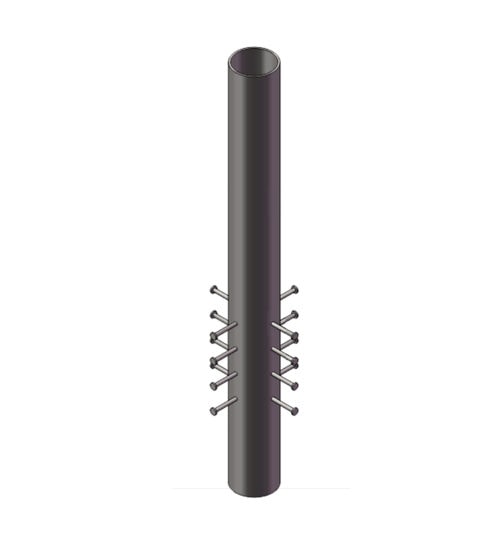
Posted by GARY BRYANT on | Comments Off on How Far Apart Should Bollards Be Placed? ADA & Security Spacing Standards Explained
How Far Apart Should Bollards Be Placed?
A Guide for Landscape Architects & Security Specifiers
Quick Answer: Typical Bollard Spacing at a Glance
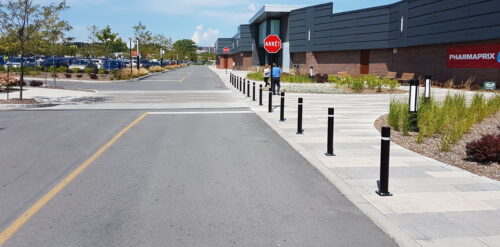
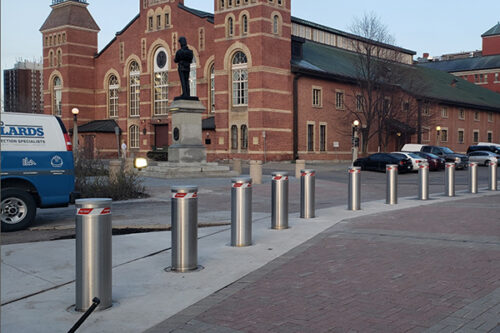
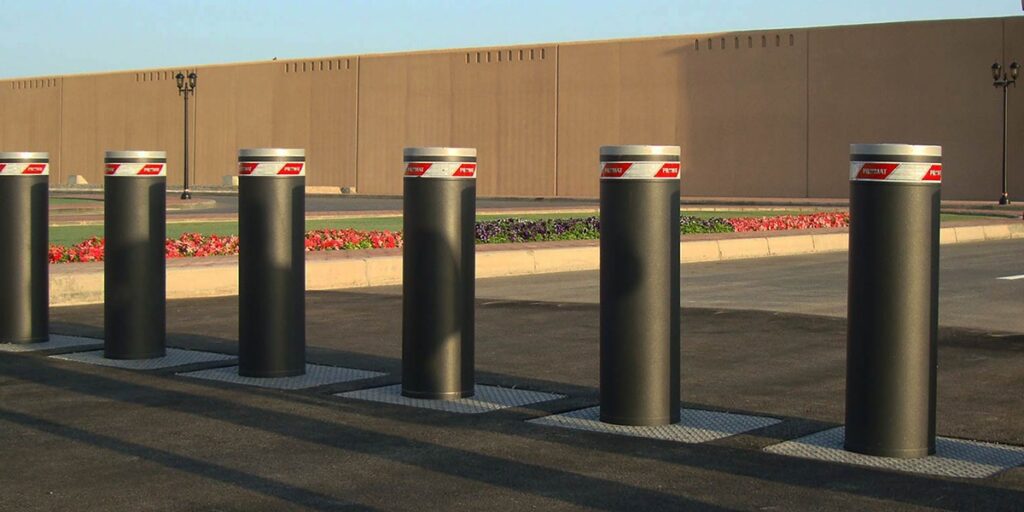
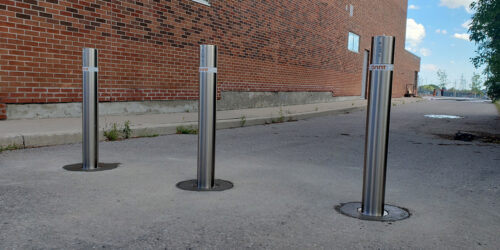
Most sites: Place bollards 3–5 feet (0.9–1.5 m) apart, measured from the center of one post to the next.
Accessibility (ADA): Leave at least 36 inches (0.9 m) of clear space for wheelchairs and walkers.
Vehicle safety: Gaps should be no larger than 5 feet (1.5 m). For high-security areas, reduce spacing to 4 feet (1.2 m) or less.
Important: Always check local building codes before finalizing your layout.
Why Spacing Matters: People, Safety, and Design
Good bollard placement is about balance:
People first: Bollards should allow smooth pedestrian flow, including those using wheelchairs, strollers, or mobility aids.
Safety: They must be close enough to stop vehicles from sneaking through, especially in front of storefronts, schools, or public plazas.
Design: Bollards should line up neatly with benches, trees, planters, and lights. This makes the space look organized and welcoming.
Your goal matters too. A storefront protection line will need tighter spacing than a decorative walkway on a campus.
Spacing Rules by Application
Pedestrian & ADA Access
Keep at least 36 inches (0.9 m) of clear width for accessibility.
In busy areas, give a little more room (42–48 inches) for comfort.
Always measure from the outside of the sleeve or cover — not just the post.
Vehicle Deterrence & Storefront Protection
Standard safety: Gaps no larger than 5 feet (1.5 m).
Higher risk: Tighten to 4 feet (1.2 m) or less.
Match spacing to the likely vehicle approach angle and speed.
Sidewalks Next to Parking
Set bollards back about 1.5 feet (0.45 m) from the curb.
This gives people enough space to open car doors.
Leave extra room near accessible parking spaces.
Campuses, Schools, and Plazas
Use a steady rhythm of 4–5 feet (1.2–1.5 m) apart.
Keep clear “desire lines” where people naturally walk.
Make sure emergency vehicles can still get through.
Utility and Asset Protection
For sensitive equipment, keep bollards 4 feet (1.2 m) or closer.
Consider adding rails or barriers for extra protection.
Don’t block maintenance crews from reaching equipment.
Spacing Summary Table
Use Case
Recommended Spacing
Notes
Pedestrian / ADA
≥36 in (0.9 m) clear width
Measure at narrowest point
Vehicle Deterrence
≤5 ft (1.5 m) gap
≤4 ft (1.2 m) for higher risk areas
Sidewalk by Parking
~1.5 ft (0.45 m) from curb
Allows car doors to open
Campuses / Plazas
4–5 ft (1.2–1.5 m)
Comfort + natural walking patterns
Utilities / Assets
≤4 ft (1.2 m) or add rails
Based on asset importance
Codes and Standards (Simplified)
ADA (Accessibility): At least 36 inches of clear space for people using mobility devices. Local versions may add more rules.
ASTM F2656 (Crash Testing): A U.S. crash standard. Some tested bollards only work if placed in a certain pattern — always follow manufacturer instructions.
Building Codes: Check International Building Code (IBC) and local rules for exits, sightlines, and fire department access.
Traffic Standards (MUTCD): Guidelines for bollards near crosswalks, schools, and intersections.
Note: Local planning departments have the final say. Always confirm with them before construction.
Layout Details: Lines, Corners, and Openings
Measurement: Measure from center to center. Don’t forget the sleeve width.
Corners: Place bollards closer together to stop diagonal vehicle movement.
Access Points: Leave 6–8 feet for gates, deliveries, or emergency access. Use removable or automatic bollards where needed.
Site Planning: Check for drainage, underground utilities, snow removal, and seasonal furniture.
Common Mistakes to Avoid
Measuring wrong: Forgetting to include sleeves or covers. Always measure the narrowest clear opening.
Corner gaps: Leaving wide angles that vehicles can cut through. Tighten bollards at corners.
Curb clearance issues: Placing bollards too close to curbs so car doors can’t open. Keep that 1.5-foot offset.
Code conflicts: Meeting one rule but breaking another. Always design to the strictest code.
Frequently Asked Questions
Q: What is the standard distance between bollards? A: Usually 3–5 feet apart, depending on security and accessibility needs.
Q: What is ADA-compliant clear width? A: At least 36 inches (0.9 m) between bollards at the narrowest point.
Q: How close should bollards be for vehicle safety? A: No more than 5 feet (1.5 m) apart. High-security areas should be 4 feet (1.2 m) or less.
Q: How far back from the curb should bollards be? A: About 1.5 feet (0.45 m) to allow doors to open.
Q: Do decorative sleeves change spacing? A: Yes. Measure spacing at the outer edge of the sleeve, not the post.
Getting Started: Your Next Steps
Download CAD/Revit details for ready-to-use layouts.
Request a site review from our team for project-specific advice.
Checklist before finalizing your design:
Clear width meets ADA rules
Local codes verified
Vehicle gaps under control
Corners secured
Emergency access allowed
Utilities and drainage checked
Ontario Bollards’ Perimeter Protection Team has extensive experience with both crash-rated and architectural bollards. Need help with your next project? Contact our team for site-specific support.
Posted by GARY BRYANT on | Comments Off on 10 Design Tips for Integrating Stainless Steel Bollards into Modern Urban Spaces
10 Design Tips for Integrating Stainless Steel Bollards into Modern Urban Spaces
Transform functional security into architectural assets with these professional design strategies
Bollards don’t have to be eyesores. When done right, stainless steel bollards enhance urban design while delivering critical protection. Whether you’re a landscape architect finalizing site plans or a security specifier balancing aesthetics with threat mitigation, these 10 proven tips will help you integrate bollards seamlessly into any modern urban project.
1. Match Your Bollard Style to Architecture, Not Afterthoughts
The biggest mistake in bollard design? Treating them as last-minute additions. Instead, choose bollard styles that echo your building’s architectural language.
For Modern Buildings: Clean, cylindrical stainless steel bollards with minimal ornamentation complement glass and steel facades.
For Historic Districts: Consider removable bollards that can disappear during events, or choose designs with traditional proportions but contemporary materials.
Pro Tip: Grade 316 stainless steel with a #6 satin finish provides the perfect balance of durability and sophistication for any architectural style.
2. Use the 3-5-7 Rule for Perfect Spacing
Professional spacing isn’t guesswork—it’s about balancing security, accessibility, and visual rhythm.
3 feet minimum: Required clearance for accessibility compliance
5 feet maximum: Prevents vehicle passage while maintaining pedestrian flow
7 feet spacing: Creates optimal visual rhythm for longer installations
Real-World Application: In downtown Toronto’s financial district, properly spaced stainless steel bollards create protective barriers that feel intentional, not chaotic.
3. Leverage Height Psychology for Better Urban Flow
Standard bollard height ranges from 36-48 inches, but the right height depends on your specific goals:
36-inch height: Less imposing, better for retail environments and pedestrian plazas
42-inch height: Optimal visibility for most urban applications
48-inch height: Maximum presence for high-security zones
Design Insight: Shorter bollards (36-38 inches) encourage interaction—people lean on them, kids play around them. Taller bollards (46-48 inches) command more respect and create stronger psychological barriers.
4. Choose Embedded vs. Surface Mount Based on Permanence
Your installation method dramatically impacts both aesthetics and performance:
Design benefit: Easier installation and potential relocation
Consideration: Base plates are visible—factor this into your design
Canadian Insight: Plan embedded installations around frost line depth (typically 4-5 feet) to prevent frost heave damage.
5. Make Retractable Bollards Invisible When Not Needed
The ultimate design trick? Bollards that disappear completely when not in use.
Manual retractable: Perfect for weekend pedestrian zones or farmer’s markets
Automatic retractable: Ideal for emergency vehicle access or high-traffic commercial areas
Design Win: Vancouver’s Robson Street uses retractable stainless steel bollards that create car-free zones during events while maintaining normal traffic flow during business hours.
6. Use Reflective Striping as Design Elements, Not Afterthoughts
Safety requirements don’t have to compromise aesthetics. Strategic reflective striping can actually enhance your design:
Single stripe: Clean, minimalist approach for contemporary spaces
Double stripes: Creates visual weight and presence
Color coordination: Match stripe colors to building accents or wayfinding systems
Pro Specification: Specify colored reflective stripes that complement your overall color palette—yellow for modern industrial, blue for corporate campuses, or red for emergency zones.
7. Group Bollards to Create Intentional Design Moments
Instead of monotonous straight lines, create visual interest through strategic grouping:
Cluster protection: Group 3-4 bollards around high-value targets like building entrances
Rhythm patterns: Vary spacing slightly to create visual movement along longer runs
Corner emphasis: Use pairs or clusters at pathway intersections
Security Benefit: Clustered bollards provide superior vehicle impact dispersion compared to single-point installations.
8. Specify 316 Grade for Canadian Weather Performance
Material choice directly impacts long-term appearance and maintenance costs:
Grade 304: Adequate for most interior or mild climate applications
Grade 316: Superior corrosion resistance for Canadian winters, salt exposure, and coastal environments
Maintenance Reality: Grade 316 stainless steel bollards maintain their appearance for decades without painting, refinishing, or replacement—crucial for municipal budgets and design integrity.
9. Integrate Lighting for 24/7 Design Impact
Modern bollards can incorporate LED elements that transform sites after dark:
Top-mounted fixtures: Provide pathway lighting while maintaining clean bollard lines
Solar options: Reduce electrical infrastructure requirements
Design Consideration: Warm LED temperatures (2700K-3000K) complement stainless steel’s natural finish better than cool white options.
10. Plan for Maintenance Access from Day One
The most beautiful bollard installation fails if it can’t be properly maintained:
Retractable systems: Ensure service access to underground mechanisms
Surface cleaning: Design landscaping to allow equipment access for periodic cleaning
Replacement planning: Specify standard sizes and finishes for future replacement parts
Long-term Success: Stainless steel’s low maintenance requirements make it ideal for installations where access is challenging—but always plan for the inevitable service needs.
Putting It All Together: Real-World Success
The best stainless steel bollard installations feel intentional, not accidental. They protect without intimidating, guide without restricting, and enhance rather than detract from the urban experience.
Quick Specification Checklist:
✅ Material: 316 stainless steel, #6 satin finish
✅ Height: 36-48 inches based on application
✅ Spacing: 3-5 feet depending on security needs
✅ Installation: Match method to permanence requirements
✅ Visibility: Reflective elements coordinated with design
✅ Maintenance: Access planned for long-term care
Ready to Transform Your Next Project?
Great bollard design doesn’t happen by accident—it requires expertise, quality materials, and professional installation. Ontario Bollards specializes in helping Canadian landscape architects and security specifiers create installations that work beautifully for decades.
Get Professional Support For Your Next Project:
Design consultation to optimize bollard placement and style
Technical specifications that meet Canadian codes and standards
Custom solutions for unique architectural requirements
Contact Ontario Bollards today for specification sheets, technical drawings, and expert consultation on integrating stainless steel bollards into your next urban project.
Ontario Bollards is Canada’s leading specialist in asset protection solutions, serving landscape architects, security specifiers, and municipal planners with premium bollard systems that combine superior protection with architectural excellence.
Posted by GARY BRYANT on | Comments Off on Crash-Rated Bollards: Essential Protection for Safer Public Spaces
Crash-Rated Bollards: Essential Protection for Safer Public Spaces
Quick Summary
Crash-rated bollards are engineered security barriers that protect pedestrians and infrastructure from vehicle impacts—both accidental and intentional. These robust barriers undergo rigorous testing to withstand high-speed collisions, making them essential for safeguarding public spaces, commercial properties, government facilities, and critical infrastructure across Ontario. Beyond their primary safety function, crash-rated bollards contribute to organized urban design and can enhance aesthetic appeal when properly integrated.
What Are Crash-Rated Bollards?
Crash-rated bollards represent a significant advancement over standard bollards in security infrastructure. These specialized barriers undergo extensive testing and certification to ensure they can stop vehicles traveling at high speeds, effectively protecting people and property from vehicle-borne threats.
Key Engineering Features:
High-strength steel core construction with reinforced concrete foundations
Energy absorption technology that dissipates kinetic force upon impact
Third-party tested and certified to meet ASTM and DOS standards
Deep foundation systems engineered for maximum stopping power
Why Public Space Safety Demands Crash-Rated Protection
In today’s urban environments—from Toronto’s city centers to Ottawa’s government districts—ensuring pedestrian safety has become paramount. Crash-rated bollards serve as the last line of defense against vehicle incursions, whether from distracted drivers or deliberate attacks.
Critical Safety Benefits:
Prevent accidental vehicle intrusions into pedestrian zones
Mitigate security threats from intentional vehicle attacks
Create clear visual boundaries between vehicular and pedestrian areas
Provide psychological reassurance to visitors and employees
The Science Behind Crash-Rated Bollard Performance
Understanding how crash-rated bollards work helps facility managers and security professionals make informed decisions. When a vehicle impacts a crash-rated bollard, the kinetic energy transfers through the bollard’s structure into its deep foundation system, where it dissipates harmlessly into the surrounding substrate.
Industry Testing Standards:
ASTM F2656-07 Classifications:
M30: Stops 15,000 lb vehicle at 30 mph
M40: Stops 15,000 lb vehicle at 40 mph
M50: Stops 15,000 lb vehicle at 50 mph
DOS K-Rating System:
K4: Stops 15,000 lb vehicle at 30 mph
K8: Stops 15,000 lb vehicle at 40 mph
K12: Stops 15,000 lb vehicle at 50 mph
Types of Crash-Rated Bollards for Different Applications
Selecting the appropriate bollard type depends on your specific security requirements, site conditions, and operational needs. Ontario Bollards offers several configurations to meet diverse security challenges:
The primary benefit remains clear: crash-rated bollards save lives by preventing vehicles from entering pedestrian spaces. This protection extends to both accidental incidents and intentional attacks.
2. Liability Risk Reduction
Property owners and municipalities face increasing liability for pedestrian safety. Installing certified crash-rated bollards demonstrates due diligence in protecting public welfare.
3. Urban Design Enhancement
Modern crash-rated bollards integrate seamlessly with landscape architecture, contributing to attractive, well-organized public spaces while maintaining security.
4. Long-Term Cost Effectiveness
While initial investment is higher than standard bollards, crash-rated systems offer superior durability and reduced replacement costs over their lifecycle.
Real-World Applications Across Ontario
Government Facilities
Federal buildings, courthouses, and municipal offices require the highest level of perimeter security. Crash-rated bollards protect against vehicle-borne threats while maintaining accessibility.
Transportation Infrastructure
Airports, train stations, and bus terminals use crash-rated bollards to separate vehicle traffic from pedestrian queuing areas and terminal entrances.
Commercial Properties
Shopping centers, office complexes, and retail storefronts benefit from crash-rated protection at building entrances and outdoor dining areas.
Public Venues
Sports stadiums, convention centers, and festival grounds employ temporary and permanent crash-rated bollards for crowd protection during events.
Critical Infrastructure
Power plants, water treatment facilities, and data centers require crash-rated perimeter security to protect essential services.
Navigating Regulatory Compliance and Standards
Compliance with recognized testing standards ensures your crash-rated bollards provide reliable protection:
Essential Certifications:
ASTM F2656-07: The North American standard for vehicle barrier testing
DOS K-Rating: U.S. Department of State anti-ram vehicle barrier standards
CSA Standards: Canadian-specific requirements for public safety barriers
Local Compliance Considerations:
Municipal bylaws regarding sidewalk installations
Heritage district restrictions on bollard aesthetics
Accessibility requirements under AODA guidelines
Selecting the Right Crash-Rated Bollard System
Making the optimal choice requires careful evaluation of multiple factors:
Security Assessment Criteria:
Threat Level Analysis: Evaluate potential vehicle speeds and weights
Site Vulnerabilities: Identify critical protection points
Traffic Patterns: Understand normal vehicle and pedestrian flows
Access Requirements: Balance security with operational needs
Plan for professional installation and ongoing maintenance
Conclusion: Protecting What Matters Most
Crash-rated bollards have evolved from simple barriers to sophisticated security systems that protect lives, property, and peace of mind. As vehicle-based threats continue to evolve, investing in properly tested, professionally installed crash-rated bollards becomes not just prudent but essential for responsible property management.
Whether protecting a government facility in Ottawa, securing a shopping center in Mississauga, or safeguarding pedestrians in downtown Toronto, crash-rated bollards provide the proven protection modern public spaces demand. The question isn’t whether to install crash-rated bollards, but rather which system best meets your specific security needs.
For expert guidance on selecting and installing crash-rated bollards for your Ontario property, contact our security specialists for a comprehensive site assessment and customized recommendations.
Posted by GARY BRYANT on | Comments Off on Essential Maintenance Guide for Retractable Bollards
Essential Maintenance Guide for Retractable Bollards
Retractable bollards are a critical component of modern security systems, offering both functionality and aesthetic appeal for commercial and residential properties. Regular retractable bollard maintenance is essential for ensuring that these systems remain reliable, safe, and visually appealing. In this comprehensive guide, we’ll explore best practices for crash-rated bollard upkeep, including routine cleaning, lubrication, winter care, rust prevention, troubleshooting, and when to call in professional support.
Ensuring the longevity and performance of retractable bollards starts with regular maintenance. These security barriers, designed to withstand high-impact collisions, can encounter issues such as jamming, rust, or electrical malfunctions if not properly cared for. Whether you’re managing facility security, overseeing urban planning projects, or maintaining perimeter security for a business, understanding how to maintain retractable security bollards is vital.
Neglect can lead to complications like:
Mechanical failures due to accumulated dirt and debris.
Rust that compromises structural integrity.
Electrical issues in automatic bollard systems.
This post provides actionable insights tailored for facility managers, security professionals, construction teams, and municipal agencies on retractable bollard cleaning, lubricating retractable bollards, and more.
Routine Cleaning & Inspection
Regular cleaning and inspection are the first steps in effective traffic control bollard maintenance. Preventing dirt buildup and corrosion can significantly extend the life of your bollards.
Why It’s Essential:
Prevents Dirt Buildup: Accumulated debris can interfere with the mechanical operations of retractable bollards.
Avoids Mechanical Failures: Regular inspections help identify issues like wear, cracks, or misalignments before they become critical.
Minimizes Corrosion: Keeping the bollards clean helps prevent rust, especially on steel components.
Best Practices:
Use Non-Abrasive Cleaners: Select cleaners that won’t scratch stainless steel surfaces.
Perform Visual Inspections: Look for signs of wear, physical damage, or misalignment.
Remove Debris: Ensure that the area around the bollard’s mechanism is free of obstructions.
Recommended Frequency:
Monthly Visual Inspections: Check for any obvious signs of deterioration.
Deep Cleaning: Every 3-6 months, perform a more thorough cleaning and lubrication check to maintain smooth operation.
Implementing these routines ensures your bollards function optimally and remain reliable over time.
Lubrication & Moving Parts Maintenance
One of the most common issues with retractable bollards is stiffness or jamming due to inadequate lubrication. Proper lubricating retractable bollards is crucial for maintaining smooth movement and preventing mechanical wear.
Common Issues:
Stiff or Stuck Bollards: Often caused by dried-up lubricants or inadequate application.
Increased Wear and Tear: Friction between moving parts can lead to premature deterioration.
How to Lubricate:
Identify Key Friction Points: Focus on hinges, hydraulic pistons, and any internal mechanisms.
Use Manufacturer-Approved Lubricants: This ensures compatibility and optimal performance.
Avoid Over-Lubrication: Excess lubricant can attract dirt and debris, negating its benefits.
Recommended Schedule:
Standard Bollards: Lubricate every 6 months.
High-Traffic Areas: For locations with frequent usage, consider quarterly lubrication.
Regular lubrication not only enhances performance but also minimizes the need for costly repairs down the line.
Winter Maintenance: Preventing Ice & Snow Buildup
Cold weather poses unique challenges for retractable bollards. Winter maintenance for security bollards is essential to prevent ice and snow from interfering with their operation.
Challenges:
Ice Formation: Can cause bollards to jam or become stuck.
Snow Accumulation: May conceal damage or lead to misalignment.
Low Temperatures: Can affect hydraulic systems and mechanical parts.
Solutions:
Apply a De-Icing Agent: Use an appropriate de-icing solution around the base of the bollard before winter sets in.
Prompt Snow Removal: Regularly clear snow to avoid buildup around moving parts.
Test Regularly: Ensure that automatic retractable bollards are functioning correctly under winter conditions.
Consider Heated Systems: For extreme climates, heated bollard systems or anti-freeze hydraulic fluid can be beneficial.
Taking proactive measures during winter not only prevents operational issues but also prolongs the lifespan of your bollards.
Preventing & Treating Rust on Bollards
Rust is a common enemy of metal structures, particularly for bollards exposed to the elements. Preventing rust on steel bollards is critical for maintaining both their appearance and structural integrity.
Why It Matters:
Structural Integrity: Rust can weaken the bollard, reducing its ability to absorb impacts.
Aesthetic Appeal: Rust can detract from the overall look of your property.
Operational Reliability: Corrosion can interfere with moving parts and lead to mechanical failures.
How to Prevent Rust:
Anti-Corrosion Coatings: Apply these coatings to protect metal surfaces from moisture and salt.
Regular Cleaning and Drying: Especially important in coastal or humid environments.
Material Selection: Opt for galvanized or stainless steel bollards for better rust resistance.
How to Remove Rust:
Light Rust: Use a rust remover and a soft brush to gently eliminate surface rust.
Heavy Rust: May require sanding, repainting, and applying a rust-resistant sealant to restore the bollard’s integrity.
Regular inspection and treatment can prevent rust from becoming a significant issue, ensuring your bollards remain both functional and visually appealing.
Troubleshooting Common Issues with Retractable Bollards
Even with regular maintenance, problems can occur. Here’s how to identify and address common issues:
Bollards Not Retracting Properly:
Potential Causes: Dirt buildup, mechanical failure, or hydraulic leaks.
Solution: Clean the area, inspect for damage, and consult troubleshooting guides for hydraulic systems.
Slow Operation in Automated Bollards:
Potential Causes: Electrical or hydraulic system malfunctions.
Solution: If lubrication and cleaning don’t resolve the issue, consider electric bollard repair or contact a professional for an assessment.
Unusual Noises During Operation:
Potential Causes: Insufficient lubrication or worn mechanical components.
Solution: Lubricate moving parts as needed and inspect for any signs of wear that might require repair.
For those experiencing persistent problems, hydraulic bollard troubleshooting can help pinpoint issues, but if problems persist, it may be time to seek professional assistance.
Professional Bollard Maintenance & Repairs
While routine maintenance can address many issues, some problems require professional attention.
When to Call a Specialist:
Electrical Malfunctions: Particularly in automatic or electronically controlled bollard systems.
Significant Impact Damage: Following vehicle impacts or severe mechanical issues.
System-Wide Failures: Persistent issues that affect multiple bollards may require comprehensive servicing.
Professional Services:
Annual Service Checkups: Recommended for high-security sites to ensure compliance and reliability.
Specialized Repairs: Professionals can address complex issues like automatic bollard system care or security barrier servicing, ensuring your system meets all operational and safety standards.
Investing in professional maintenance not only ensures compliance with safety standards but also prolongs the lifespan of your security infrastructure.
Maintaining retractable crash-rated bollards is not just about ensuring functionality—it’s about protecting your property, safeguarding personnel, and preserving the aesthetic integrity of your environment. By implementing a proactive maintenance schedule that includes regular cleaning, lubrication, winter care, rust prevention, and timely professional repairs, you can significantly extend the life and reliability of your bollards.
Key takeaways:
Routine Cleaning & Inspection: Prevents debris buildup and identifies early signs of wear.
Lubrication: Ensures smooth operation and reduces mechanical strain.
Winter Maintenance: Critical for preventing ice, snow, and freezing issues.
Rust Prevention & Treatment: Maintains structural integrity and appearance.
Troubleshooting: Helps identify and address common issues promptly.
Professional Assistance: Necessary for complex repairs and system-wide issues.
Ready to enhance your security measures? Subscribe to our blog for more in-depth maintenance tips or contact us today to learn about professional bollard servicing solutions tailored to your needs.
Regular maintenance is an investment in safety and reliability—start implementing these practices today to ensure your retractable bollards perform flawlessly, season after season.
Posted by GARY BRYANT on | Comments Off on Why Every Storefront Needs Crash Protection
Why Every Storefront Needs Crash Protection
In recent years, vehicle crashes into storefronts have become a persistent and costly issue for business owners and property managers across North America. These incidents often occur without warning, resulting in devastating consequences such as structural damage, financial losses, and even injuries or legal complications. As experts in perimeter protection, Ontario Bollards is here to educate storefront owners on the importance of proactive measures like bollard installation to protect your property and ensure safety.
The Alarming Reality of Storefront Crashes
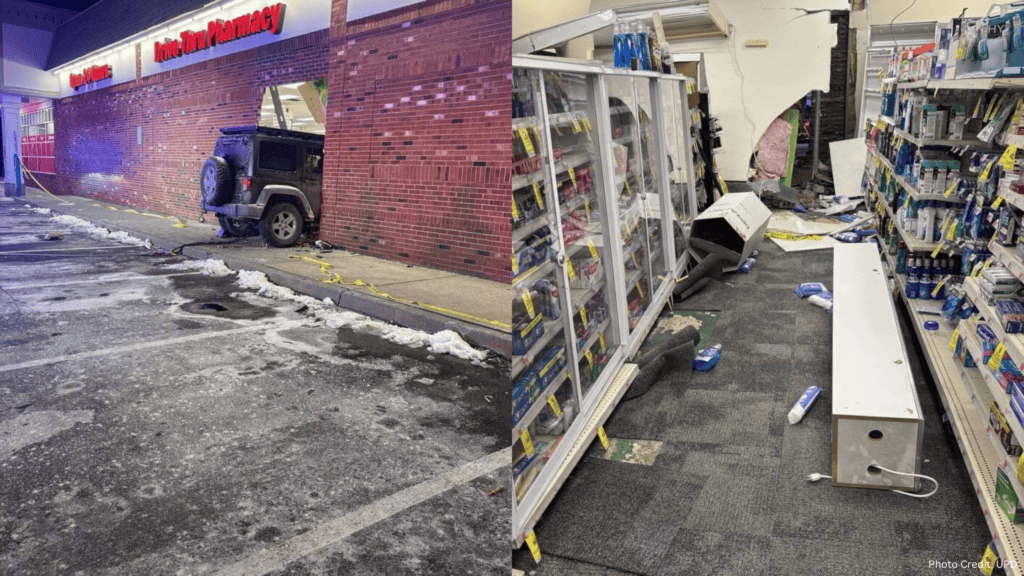
Storefront crashes are more frequent than many realize, and the consequences can be severe. High-profile incidents such as the vehicle impacts at Cambridge Plaza, which caused a chain reaction of damage, and multiple crashes at the CVS on Morris Avenue in Union, New Jersey, highlight the dangers of unprotected storefronts.
Closer to home, a crash in Angus, Ontario, left a storefront with extensive structural damage requiring months of costly repairs. Similarly, a recent collision in Burlington emphasized the need for adequate perimeter protection in high-traffic areas or where storefronts are adjacent to roadways or parking lots.
The Cost of Inaction
Failing to protect your storefront can lead to significant financial, operational, and legal repercussions:
Financial Losses
Immediate Costs: Repairing structural damages and replacing inventory can cost tens of thousands of dollars—or more.
Business Interruption: Temporary closures for repairs result in lost revenue and potential customer attrition.
Insurance Implications: Multiple claims may lead to increased premiums, higher deductibles, and limited coverage in the future.
Legal Liability
Business owners are legally obligated to maintain safe conditions for their employees and customers. If your property lacks adequate protection, you could be held liable for injuries or damages resulting from a crash—especially in areas with a history of incidents. Proactive measures like bollards demonstrate due diligence, mitigating your legal risks.
Bollards: The Proven Solution for Storefront Protection
At Ontario Bollards, we specialize in tailored solutions to protect businesses from vehicle crashes. Bollards provide an effective barrier between vehicles and your building, offering safety and peace of mind.
Types of Bollards
Fixed Bollards
Permanent installations for high-risk areas.
Durable materials designed to withstand significant impact.
Customizable designs to align with your building’s aesthetic.
Removable Bollards
Flexibility for areas requiring occasional vehicle access, such as loading docks.
Easy to install and remove without compromising security.
Automatic Bollards
Advanced access control for high-security locations.
Remote operation for enhanced convenience and safety.
Why Choose Bollards?
Enhanced Safety: Protects pedestrians, employees, and customers.
Property Preservation: Minimizes repair costs and prevents business interruptions.
Implementing bollards and other perimeter protection solutions involves careful planning. Ontario Bollards can assist with every step:
Risk Assessment
Evaluate proximity to traffic, historical incidents, and building vulnerabilities.
Design and Aesthetics
Choose bollards that enhance your storefront’s appearance while providing robust protection.
Professional Installation
Ensure proper installation to meet safety standards and maximize effectiveness.
The ROI of Storefront Protection
While there’s an upfront cost to installing bollards, the long-term savings and benefits far outweigh the expense:
Lower Insurance Premiums: Demonstrating risk management can result in reduced premiums.
Business Continuity: Protecting your storefront minimizes downtime and operational disruptions.
Enhanced Reputation: Customers and employees feel safer in a well-protected environment.
Why Ontario Bollards?
As a leader in perimeter protection, Ontario Bollards provides high-quality, customizable solutions to safeguard storefronts across Canada. With years of expertise, we work with businesses to assess risks, design protective systems, and install bollards that meet the highest standards of safety and durability.
Take Action Today
Don’t wait until an incident occurs to recognize vulnerabilities in your storefront security. Contact Ontario Bollards to schedule a consultation and ensure your business, employees, and customers are protected. Together, we’ll develop a comprehensive perimeter protection plan to safeguard your property for years to come.
Posted by GARY BRYANT on | Comments Off on Bollard Installation Guide
Bollard Installation Guide
Security bollards have become essential for protecting vehicles, workers, pedestrians, and buildings from potential hazards. Whether in Toronto, Brampton, Mississauga, Hamilton, Guelph, or other Ontario cities, selecting the right bollard depends on your specific needs and site requirements.
Types of Safety Bollards
Bollards are critical for protecting pedestrians and buildings. They come in various materials, typically metal or concrete and serve different purposes based on their type.
Removable Bollards
Removable bollards provide both physical and visual barriers, ideal for temporary work zones. They signal lane closures, roadwork, or heavy traffic to drivers and pedestrians. Removable bollards are great for temporary restriction/access control.
Retractable Bollards
Built into the ground, retractable bollards also known as collapsible bollards can be raised or lowered as needed. They are perfect for areas requiring frequent access such as government buildings or private property. These retractable bollards can be controlled automatically or manually.
Fixed Bollards
Permanently installed, fixed bollards are used to protect areas from traffic. They are commonly found in shopping plazas and in front of government buildings and storefronts providing a robust security solution.
Choosing the Right Bollard
When selecting a bollard, consider the specific needs of your site. Each type offers unique benefits for different scenarios, ensuring safety and functionality. For professional advice and installation, contact Ontario Bollards today.
Why You Should Install Safety Bollards
Safety bollards provide numerous community benefits, such as:
Enhancing Area Appearance: Decorative bollards add a creative touch to driveways and commercial properties.
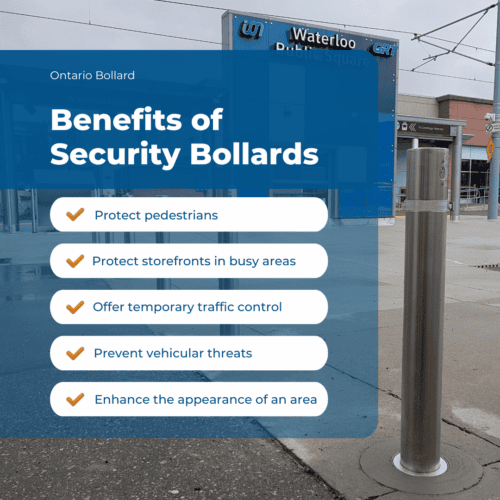
Protecting Storefronts: Bollards reduce theft risk and prevent vehicles from accidentally or intentionally driving into storefronts.
Safeguarding Pedestrians: Bollards keep vehicles away from pedestrian areas, like bike lanes, park entrances, schools, and airports.
Improving Night Visibility: Bollards with lighting devices enhance visibility and discourage crime.
Providing Temporary Traffic Control: Removable & Surface mount bollards manage traffic during events or specific times, like school pick-ups and drop-offs.
Restricting Access: Security teams use bollards to secure high-security areas.
Preserving Historic Sites: Bollards protect against damage and vandalism at historic locations.
Selecting Your Bollards for Installation
When choosing bollards for installation in Ontario cities like Toronto, Brampton, Mississauga, Hamilton, and Guelph, it’s essential to consider the specific needs of each location. Ontario Bollards offers a variety of options tailored to diverse requirements.
Security and Crash-Rated Bollards
These bollards offer a wide range of use cases for industrial areas and high-security locations while providing traffic control. Made of durable materials, they can be customized in various colors and styles to suit your needs.
Retractable Bollards
Perfect for designating access for authorized maintenance, deliveries, or emergency vehicles, retractable or collapsible bollards block pedestrian and vehicle traffic when needed. They come in various shapes and sizes and are designed to minimize vehicle damage if struck.
Architectural and Decorative Bollards
Enhancing both aesthetics and security, architectural and decorative bollards are popular in front of buildings, near entrances, or along pathways. These bollards can include decorative chains and come in a wide variety of types and covers to match the style of historic or modern properties.
Expert Consultation and Installation
Ontario Bollards provides professional consultation to help you select the best bollards for your needs, ensuring compliance with local regulations and optimal safety for your site. Our experienced team handles everything from selection to installation, offering tailored solutions for each unique environment.
For more information or to schedule a consultation, contact Ontario Bollards today and secure your site with the best bollard solutions.
Local Codes: Ensure compliance with local building codes and ordinances.
Permits and Depth: Consult with the Building Code Department regarding necessary permits and recommended digging depth.
Emergency Access: Ensure passages allow emergency vehicle access by law.
Consult Authorities: Work with site planners and local authorities to understand bylaws and ordinances.
Site Plans:
Architect’s Role: Refer to site plans created by the architect for spacing and installation methods.
Spacing of Bollards:
Row Installation: Install bollards in a row for visibility.
ADA Compliance: Ensure enough space between bollards for wheelchair and motorized chair access.
Contextual Spacing: Adjust spacing based on the area being protected and the expected traffic (pedestrians, cyclists, or vehicles).
Additional Considerations:
Purpose and Placement: Determine the primary purpose (e.g., protection, traffic control) and ideal placement based on site-specific needs.
Material and Design: Choose bollards that fit the aesthetic and functional requirements of the location.
Preparing for Bollard Installation in Ontario
Preparing for Installation
Before installing bollards, it’s crucial to properly prepare the site to ensure the bollards stand straight and function correctly.
Check for Hazards: Before digging, check for underground hazards such as pipes, gas lines, and wiring. Refer to site plans or contact a professional to identify these hazards.
Drill the Holes for Bollard Bolts: Center the drill bit on the marked location and use a smaller drill to mark the centers. Drill to the full depth of the drill bit to create the necessary holes.
Clean the Site: After drilling holes and mixing cement, clean the worksite to remove any dirt and debris that could obstruct the placement of the bollards. Use a broom, pressure washer, or vacuum to ensure the concrete surface is clear and ready for installation.
Make a Concrete Base: If the bollards are being installed on a surface other than concrete, you need to create a stable concrete base. Concrete is resistant to weather changes and provides a stable platform for bollards. To create the base, cut the tubing to the correct length, leaving space for landscaping if necessary. Mix the concrete according to the manufacturer’s instructions until it has a moldable clay-like texture. Pour the concrete evenly into the hole, place the anchor casting inside, and allow it to cure for 2-3 days before proceeding.
How to Install Different Types of Bollards
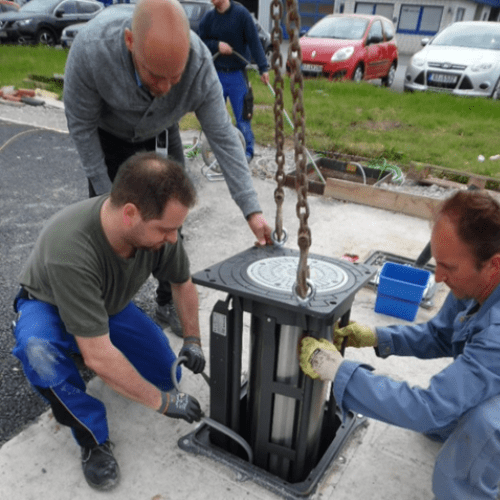
Removable Bollards: Removable bollards are ideal for temporary work zones. Handle them carefully to prevent surface damage, and keep them in packaging until ready to install. Use a high-powered auger to drill holes and clean any debris with a vacuum. Place a rebel cage and gravel at the site, lay the bollard’s ground sleeve in the ground, and fill the hole while keeping the sleeve steady.
Collapsible Bollards: Collapsible bollards prevent vehicle damage and are flexible for temporary work zones. Set the depth control on your hammer drill according to the manufacturer’s specifications, drill holes, and clear debris. Insert a drop-in insert into each hole and secure it with a setting tool and hammer. Place the fold-down base over the holes, secure with washers and bolts, and test the bollard by raising and lowering it.
Fixed Bollards: Fixed bollards are easier to install than removable ones. Refer to site plans to determine installation locations and scan for underground hazards. Break the surface and dig a hole according to the bollard’s specifications. Insert the bollard base into a concrete mix, hold it in place to ensure it stands straight, and fill the hole with concrete. Clean any residue with a soft cloth and water.
Completing the Process
To prevent dust, debris, and water from accumulating on a flat-topped pipe bollard, finish it with a concrete top, bollard cap, or cover. A concrete top can be molded into a dome shape for durability. A bollard cap should be added while the concrete is wet to provide a uniform appearance. Alternatively, you can paint the bollard or add a plastic cover for reduced maintenance and enhanced appearance.
For professional bollard installation services in Toronto, Brampton, Mississauga, Hamilton, Guelph, and other Ontario cities, contact Ontario Bollards today.
Posted by GARY BRYANT on | Comments Off on What is a Bollard? Understanding Their Importance and Applications
What is a Bollard? Understanding Their Importance and Applications
Bollards are essential fixtures in urban landscapes, providing a blend of security, aesthetics, and functionality. At Ontario Bollards, we specialize in a wide range of bollards designed to meet various commercial needs
What is a Bollard?
A bollard is a short, sturdy post installed to control or direct road traffic, and protect property and pedestrians. Bollards come in various types, including automatic, semi-automatic, fixed, removable, shallow mount, and surface mount. They can be classified based on their security ratings such as K-rated, M-rated, or non-rated, indicating their ability to withstand impact forces.
Decorative vs. Security Bollards
Decorative Bollards
Decorative bollards primarily focus on enhancing the visual appeal of an area while providing moderate security and traffic control. These bollards are often used in commercial properties, public spaces, and residential areas to create an aesthetically pleasing environment. They come in various designs, materials, and finishes to match the architectural style of the surroundings.
Key Features of Decorative Bollards:
Enhance property aesthetics
Moderate traffic control
Available in various designs and materials
Security Bollards
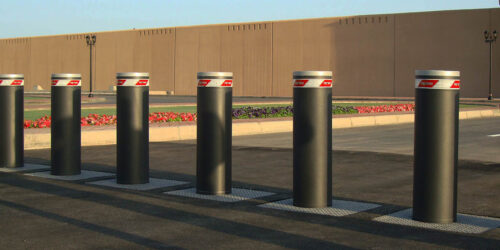
Security bollards are designed to provide maximum protection against vehicle impact, ensuring the safety of sensitive locations such as government buildings, data centers, and military facilities. These bollards undergo rigorous crash testing and are certified with ratings like K4, K12, M30, and M50, indicating their ability to stop vehicles of different sizes and speeds.
Types of High-Security Bollards:
Automatic Bollards: Can be raised or lowered with a control system, ideal for dynamic access control.
Semi-Automatic Bollards: Require manual intervention to operate, providing a balance between automation and cost.
Fixed Bollards: Permanently installed for constant protection.
Removable Bollards: Can be easily removed and reinstalled, offering flexibility for temporary access control.
Shallow Mount Bollards: Installed in areas with limited depth, suitable for urban environments.
Surface Mount Bollards: Installed on the surface without the need for excavation, ideal for quick and easy deployment.
For more information on our high-security bollards, visitANNT Bollards.
Bollard Covers: Enhancing Durability and Appearance
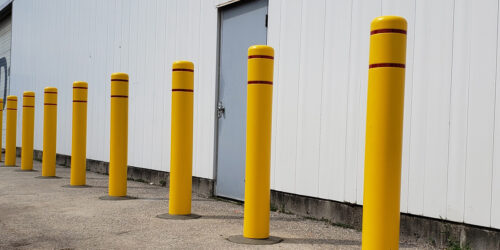
Bollard covers are an excellent addition to any bollard, offering numerous benefits:
Quick Payback: Eliminates the need for constant repainting, reducing maintenance costs.
High Quality Plastic: Designed to withstand all weather conditions.
Reflective Striping: Increases visibility and safety, especially in low-light conditions.
Easily Installed: Slides over existing posts, simplifying the installation process.
Fade Resistant: Comes with a 6-year guarantee, the longest in the industry.
Great Looking: Improves the overall appearance of the property.
Secure: Locks in place to help prevent theft.
Fast Shipments: Typically ships the same day or next, ensuring quick delivery.
Applications of Bollards in Various Industries
Bollards play a crucial role in different industries, providing both security and functional benefits:
Commercial Properties: Control vehicle access, protect storefronts, and enhance property aesthetics.
Government Buildings: Ensure high-level security and control access to sensitive areas.
Data Centers: Protect critical infrastructure from vehicular attacks.
High-Security Buildings: Provide maximum security for military facilities and other high-risk locations.
Bollards are versatile tools that enhance security, control access, and improve the appearance of various properties. Whether you need decorative bollards to add a touch of elegance or high-security bollards to protect sensitive areas, Ontario Bollards has the perfect solution for you. For more information on our products and to explore how they can benefit your property,contact us today.
Posted by GARY BRYANT on | Comments Off on Costco Joins the Fight Against Auto Theft with Ontario Bollards
Costco Joins the Fight Against Auto Theft with Ontario Bollards
Auto theft has become an escalating issue in urban areas, with car owners constantly seeking new ways to protect their vehicles. Recognizing this growing concern, Ontario Bollards has taken significant steps to provide a robust solution. Our top-of-the-line retractable bollards are now available at Costco, making it easier for consumers to safeguard their vehicles.
Why Bollards?
Bollards are an effective deterrent against car theft. These sturdy posts, when installed in driveways, create a physical barrier that prevents unauthorized access. Unlike traditional security measures, bollards offer a tangible line of defense that is both visible and effective.
Costco’s Role in Enhancing Security
Costco, a retail giant known for offering high-quality products at competitive prices, has joined the fight against auto theft by including retractable bollards supplied by Ontario Bollards in their product lineup. This partnership not only signifies the trust and reliability in our products but also expands accessibility for customers seeking top-notch security solutions.
Going Viral on Instagram
Our partnership with Costco has also gone viral on Instagram, with the popular account@costcofindscanada showcasing our bollards. The overwhelming positive response underscores the growing public awareness and demand for effective security solutions.
Our bollards have gained significant attention in recent media coverage. Notable publications have highlighted the effectiveness and necessity of such measures:
Toronto Star discusses the innovative approach Costco is taking by offering bollards as a security measure.
National Post covers the growing trend of installing bollards to prevent auto theft.
Toronto Sun highlights the surge in bollard installations in residential areas.
CTV News features stories of Torontonians who have successfully deterred theft with bollards.
Protect Your Vehicle Today
With auto theft on the rise, there’s no better time to invest in reliable security measures. Ontario Bollards provides the peace of mind that comes with knowing your vehicle is protected by one of the most effective deterrents available. Visit your local Costco to purchase our bollards and join the fight against auto theft.
Secure your driveway and protect your peace of mind with Ontario Bollards, now available at Costco.
Posted by GARY BRYANT on | Comments Off on Enhancing Parking Lot Access Control with Removable Stainless Steel Bollards
In today’s fast-paced world, maintaining the security and accessibility of parking lots is crucial for businesses and property owners. One of the most effective solutions to achieve this is the use of removable stainless steel bollards. At Ontario Bollards, we offer top-of-the-line bollards designed to provide superior access control and security for parking lots.
Specifications and Features of Removable Stainless Steel Bollards
Our removable stainless steel bollards are designed for durability and performance. Key features include:
High-quality Material: Made from robust stainless steel with anti-corrosion treatments.
Versatile Design: Easy to install and remove, making them perfect for flexible access control.
Durability: Built to withstand significant impact and harsh weather conditions.
Reflective Strip: Enhances visibility for added safety.
These features ensure that our bollards are not only functional but also long-lasting and aesthetically pleasing.
Benefits of Using Removable Bollards in Parking Lots
Enhanced Security and Control: Removable bollards provide a versatile solution for controlling vehicle access in parking lots. They can be easily installed and removed as needed, allowing for flexible access control during different times of the day or for special events.
Durability and Longevity: Made from high-quality materials with anti-corrosion treatments, our bollards are designed to withstand harsh weather conditions and resist wear and tear, ensuring long-lasting performance.
Aesthetic Appeal: The sleek design and brushed finish of our stainless steel bollards add a touch of modern elegance to any parking lot, enhancing the overall appearance while serving a functional purpose.
Safety: With a high impact and breakout resistance, these bollards provide a reliable barrier against unauthorized vehicle entry, helping to prevent accidents and unauthorized access.
Why Choose Ontario Bollards?
At Ontario Bollards, we are committed to providing the best access control solutions for our clients. Our removable stainless steel bollards are meticulously designed and engineered to meet the highest standards of safety, durability, and functionality. By choosing our products, you are investing in quality and peace of mind.
For more information on our removable stainless steel bollards and to explore how they can benefit your parking lotcontact us today. Our team of experts is ready to assist you in selecting the perfect bollard solution for your needs.
Posted by GARY BRYANT on | Comments Off on Choosing the Right Bollards for Storefront Safety
Choosing the Right Bollards for Storefront Safety
Imagine a quiet day turned chaotic as a car, losing control, barrels towards a storefront. In a split second, the only line of defense—a bolt-down bollard—gives way, torn from its concrete moorings. Glass shatters, metal bends, and the safety of patrons hangs in the balance. This isn’t a scene from a movie; it’s a real-life incident that exposes the vulnerability of inadequate security measures.
The stark aftermath images of a car crashing into a storefront, tearing out a conventional bolt-down bollard, underscore an urgent truth: when it comes to protecting people and property, aesthetics and minimum standards aren’t enough. It’s a matter of prevention and robust protection.
The False Security of Bolt-Down Bollards
The incident brings to light the false security promised by traditional bolt-down bollards. Seemingly sturdy, these bollards stand on a fragile foundation—only as strong as the concrete that anchors them. When put to the test by a vehicle’s force, they fail, offering minimal resistance and maximum risk.
A Step Towards Resilience
In the face of such threats, our bare minimum security measure for storefronts should be 6” fully embedded bollards. Extending four feet below and above the ground, they offer a security rooted in strength, capable of withstanding significant force without yielding.
The 150C40FX Crash Certified Bollards
For those who prioritize the highest level of security, ännT presents the 150C40FX crash-certified bollards. These are designed not just as barriers but as fortresses, offering high-impact resistance while preserving the aesthetic integrity of storefronts.
The need for heightened security is more apparent than ever. Not all bollards are created equal, and the ännT 150C40FX is proof of safety innovation. Choosing ännT Bollards is not merely about installing a security feature; it’s about a steadfast commitment to safety and resilience.
Don’t let a close call become a wake-up call. Reach out to Ontario Bollards now for more information on securing your business with the best line of defense.